
What the Island Was Made to Grow
I am aboard a ferry crossing Lake Victoria to Ukerewe, the largest island in a lake that was once itself called Ukerewe. I have been returning to Tanzania my entire life, but this is my first visit to the island where my paternal grandfather was born, the grandfather whose name I carry. I have come only after my father’s death. Ukerewe is also a stop on Refracting Africa’s Baba Yangu (“My Father”) Tour, a journey through the places my paternal line called home.
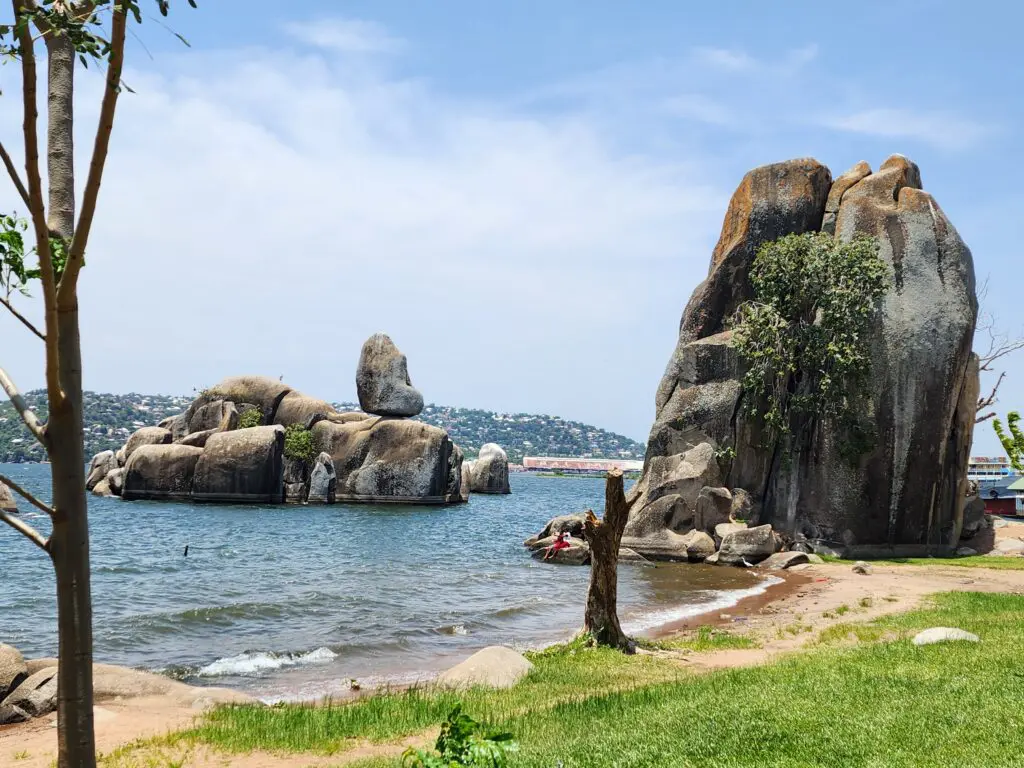
Some of the crew are curious about what an American is doing on his way to Ukerewe. They know I am Tanzanian by parentage, so they suppose I must be visiting relatives. We make jokes, and I explain that I have no more family on the island, at least none that I know. My grandfather came from here, I tell them, and I want to feel some connection to him. I am told that only one or two of my cousins have ever visited before me. The island has remained part of our family history while gradually disappearing from our family’s life.
The ferry is thoroughly modern, carrying passengers and goods between the island and the mainland, part of the ordinary commerce and movement across the lake. I am coming in search of a past, though nothing about the journey belongs only to the past.
At Nansio, I disembark and meet Paschal, the Kerewe guide who will show me around the island. Looking at his face, I am immediately reminded of my father’s drawings.
My father used to draw faces that I found strange. Something about their features and proportions seemed unfamiliar, and I took this to be his particular artistic style. Only after I began spending more time in Tanzania, especially in the Mara and Mwanza regions, did I start recognizing those faces among the people I met. What I had understood as an artistic mannerism was also a way of drawing people he knew, drawings of my people, people with faces like my own. Since his death, I have thought about this often. I have none of his drawings anymore, yet here is Paschal, standing before me on the shore of my grandfather’s island, looking like someone my father might have drawn.

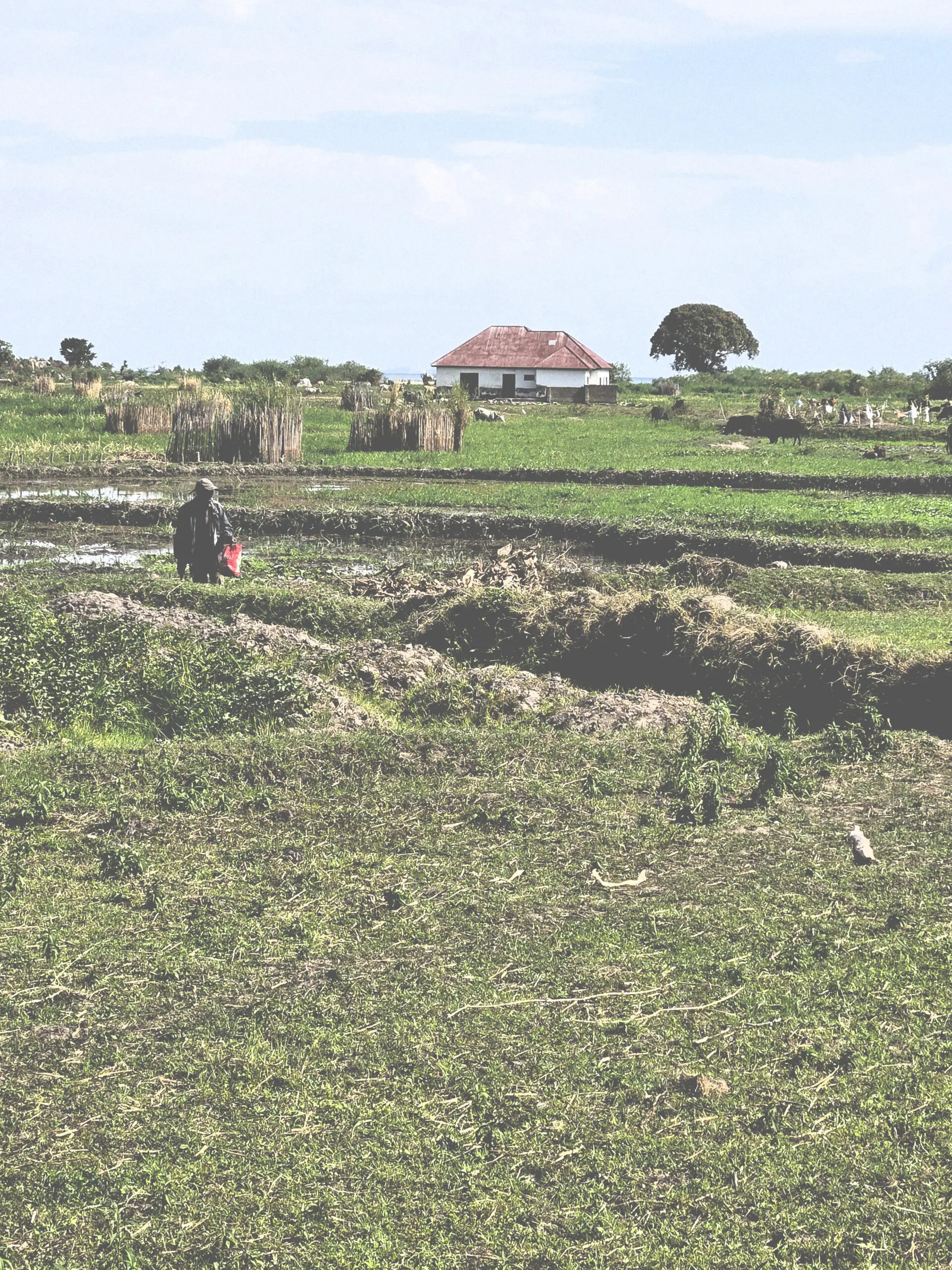
Paschal takes me through a country of farms and trees. The cultivated land is beautiful, its fields divided into small holdings, fruit trees growing around houses, greener patches of cultivation running toward the lakeshore. Citrus, mango, banana, cassava, rice: Ukerewe is a remarkably productive agricultural country. Trees shade the roads and stand among the farms, though the forests that once covered much of the island are gone.
The trees I am admiring belong largely to the agricultural landscape that succeeded the forest. Under British rule, households were required to maintain woodlots, and roads were planted with cassia trees for shade and firewood. What I am looking at is not the survival of an ancient landscape but another landscape, cultivated and maintained by generations of people. Its beauty does not make the history of its making any less troubling.
Long before the Germans arrived, the Kerewe were connected to the wider world through the ivory trade. Elephants inhabited the island’s forests, and their tusks entered commercial networks joining Lake Victoria to the East African coast and the Indian Ocean. In my essay on Kilwa, I followed those movements toward the coast. Here I have arrived at one of their inland beginnings.
The Kerewe also cultivated rice before colonial rule. Trade and agricultural change were hardly foreign to them. Growing crops within an existing social and ecological order, however, was different from clearing the island’s forested interior to make agriculture answer to the requirements of a colonial economy.
That transformation followed the German conquest.
In 1895, the Kerewe ruler, the omukama Rukonge, came into conflict with the White Fathers, the Catholic Missionaries of Africa. Rukonge’s people attacked the mission, and the missionaries appealed to the German colonial army. German troops came to the island, destroyed Rukonge’s residence at Bukindo, and brought his rule to an end. According to the account I was told, Rukonge fled and accepted responsibility for the conflict to spare his people further slaughter.
His successor submitted to German authority. The terms reached beyond political obedience. The sons of leading families were to attend mission schools, the people were to embrace Christianity, and the sacred figures through which the Kerewe maintained relations with their ancestors were to be surrendered and destroyed.
One such figure, called kigiilya, had belonged to Rukonge’s father, Machunda. It represented royal authority and was believed to house the spirit of a deceased relative. German soldiers seized it from Bukindo and carried it to the Catholic mission, where it was displayed and mutilated. In 1897, a German soldier sent the damaged figure to Berlin’s ethnological museum.
The missionaries participated in destroying a religious order whose material remains Europeans were simultaneously collecting for preservation. The figure remains in Germany. I have also been told that a German museum has approached descendants of the Kerewe ruling family about approximately a hundred objects in its collections, with their possible return dependent upon the descendants demonstrating their capacity to receive them. Having helped dismantle the institutions that once cared for these things, European authorities now presume to judge whether their inheritors can care for them again.
The conquest of Kerewe authority opened the way for the transformation of Kerewe land. German officials encouraged migration to the island, bringing settlers to clear forests for cultivation. Rice became a commercial crop, and cotton another major object of colonial agricultural policy. Ukerewe became an important producer of both. Within decades, the forests had largely disappeared, apart from protected woodland toward the northwestern end of the island. The elephants disappeared with them. By 1936, only some three dozen remained, and that year British authorities reportedly arranged to have the last of them rounded up and killed.
Cotton gives this history another connection to the wider world. As I discussed in my essay on Selous and the Rufiji, German colonial planners looked to the post-emancipation American South for models of organizing Black agricultural labor. Sharecropping offered ways of compelling production for distant markets without formally reproducing slavery. The object was to make African land and labor serve an accumulation process centered elsewhere.
The political economist Issa Shivji describes the colonial economy as “typically disarticulated, almost tailor-made, for exploitation by colonial capital.” What was produced was not necessarily what local people needed, and what local people needed was not necessarily what the economy was organized to provide. On Ukerewe, an agricultural system already capable of sustaining life was reorganized to produce for the market.
The British continued this project, governing through Kerewe rulers by the machinery of indirect rule. The chiefs retained their titles and a measure of authority, though colonial administration had changed what that authority was for. They became intermediaries through whom officials could govern, collect revenues, regulate cultivation, and compel obedience.
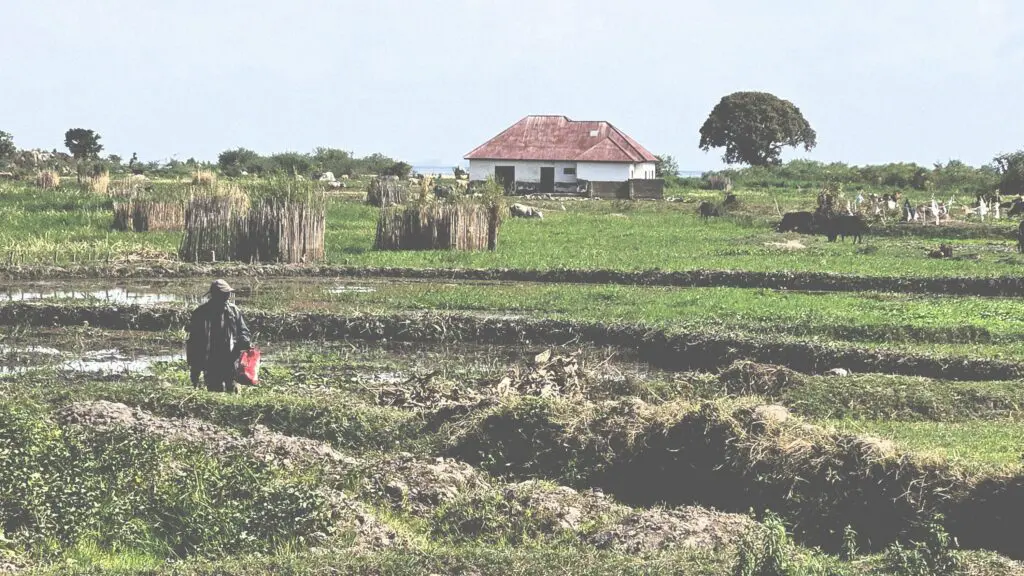
My grandfather worked for the British as an agriculturalist, teaching farmers methods sanctioned by the colonial authorities and encouraging the production of crops for the market. I am told that this made him unpopular. Some villagers are said to have placed a curse on him for interfering with the ways they worked their land. They wanted to cultivate according to their own beliefs and purposes, while my grandfather brought instructions backed by the government.
I do not know what he thought of his work. He may have believed he was improving agriculture and the lives of farmers. What troubles me is that improvement itself was defined by an authority outside the communities being improved. I have inherited his name, perhaps also his curse, and I know the resentment he provoked better than I know the man.
Independence brought another transformation. In 1963, Nyerere’s government abolished chiefly rule, regarding the chiefs as remnants of colonial administration and obstacles to national unity. The old political order, already subordinated to the Germans and British, was now to disappear into the new nation.
The nationalist government also claimed the authority to determine how land should be used and where people should live. Under ujamaa villagization, households were moved from dispersed homesteads into settlements planned by the state. Fields, homes, and customary relations to particular places were reorganized in the name of socialism and development. On Ukerewe, ancestral homesteads and buildings fell into ruin. Sacred woods were cleared for new settlements; burial grounds became agricultural land. Newcomers were brought to make more productive use of country whose older inhabitants had understood it differently.
Nyerere intended to construct a national economy that would overcome colonial underdevelopment. In doing so, however, the nationalist state continued a transformation colonialism had begun: the displacement of local authority over land and life by the purposes of a centralized power. The Germans had called it civilization, the British improvement, and the nationalists development. Each had its own project of remaking the country and its people.
I visit the old Catholic mission. The church established its presence on Ukerewe in the 1890s, at Kagunguli, where its institutions of worship, schooling, and medical care have continued through the colonial and national periods. I speak with women there and give them my grandfather’s name, which is also mine, hoping to discover which Kerewe clan he belonged to. They are uncertain.
Elsewhere, I visit an mganga, a healer and diviner. He is not Kerewe but a Muslim from another people, married to a Kerewe woman, who practices herbal medicine and bibliomancy using the Qur’an. I have come to an island whose religious institutions were violently transformed, seeking something of what preceded that transformation. Instead, I encounter another religious world, formed through movement, marriage, and exchange, thoroughly at home in the present.
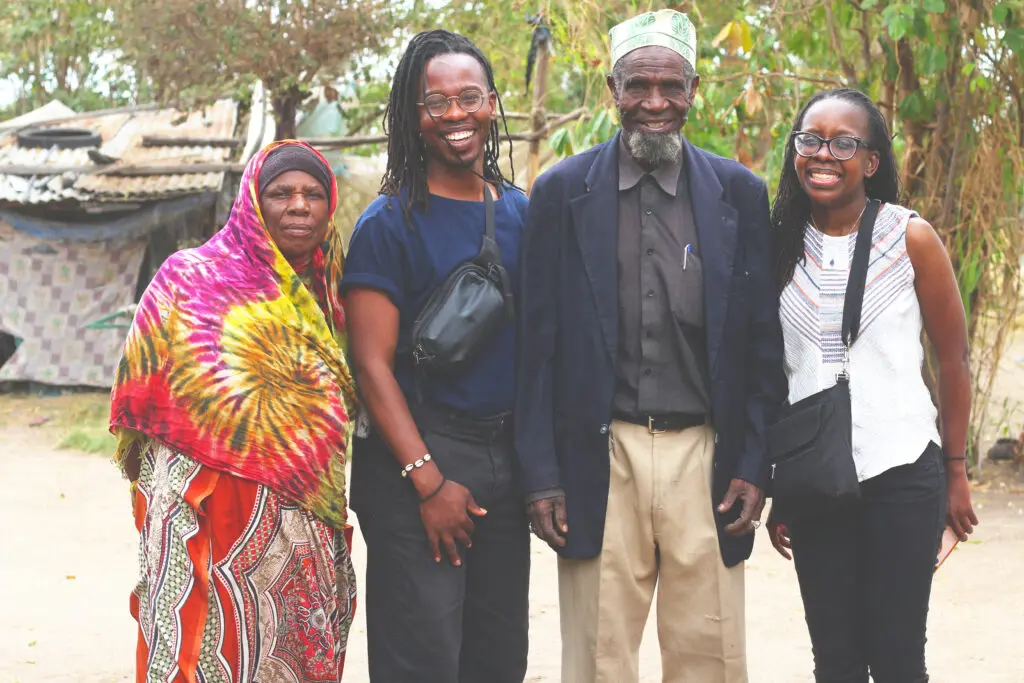
There is no untouched Kerewe world waiting for me here. The Catholic mission remains, the royal figure is in Berlin, the chiefs are gone, and the forests have become farms. The land is beautiful, people continue to make lives upon it, and the island remains Kerewe after everything that has passed through it.
I think again of Paschal’s face and my father’s drawings. I had mistaken something familiar to my father for something strange because I did not know the world from which he had come. I wonder how much else I have misunderstood in this way.
The ferry crew had supposed I was coming to visit family. I told them I had no family left on Ukerewe, that I was coming because of my grandfather. I left without learning his clan or knowing what became of the curses spoken against him. I had, however, seen the country he came from, and some of the history that had made him the man he became.
I had also seen, in a stranger’s face, a drawing by my father that I hold only in memory, and a people to whom I had belonged all along.