
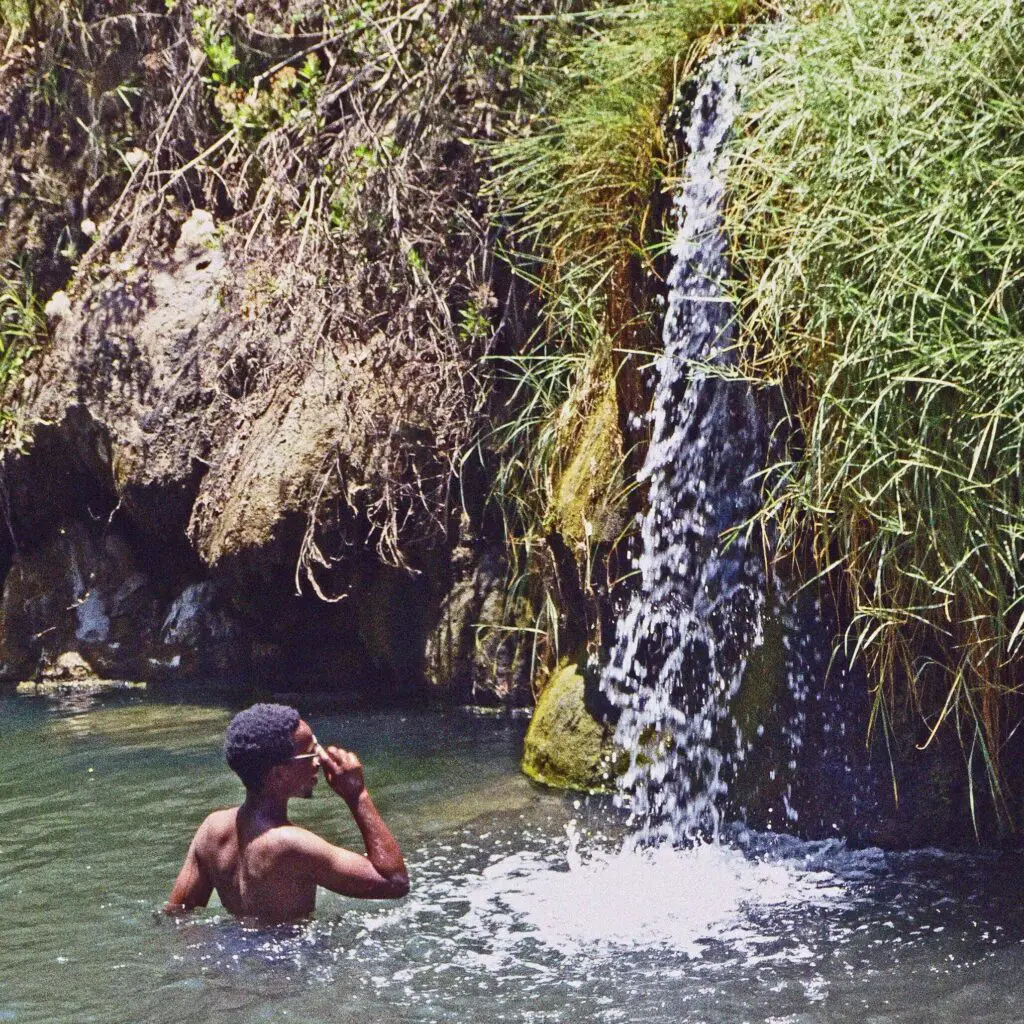
I am chest-deep in the hot springs at Maji Moto in the Selous Game Reserve, in what is now encompassed by Nyerere National Park, the second stop of Refracting Africa’s Misafara Tour. It is early 2015, the hot months before the long rains. One of our guides is sitting at the edge of the pool. He tells us that this is where the maji (water) was taken. The maji of Maji Maji. The water carried into battle in 1905 by the peoples who rose against German rule, water that was to turn the bullets of the Schutztruppe into water.
Nyerere National Park is quite different from the Serengeti, and it feels alien to me: a country of woodland and riverine forest, of palms and lagoons, braided around the Rufiji as it gathers the Ulanga and the Great Ruaha and carries them to the sea. Tanzania is the place I come from and return to, but there are worlds within it for which I have very little preparation.The guides’ story opens a difficulty inside the pleasure of being here. I have entered a conservation area, and I am hearing about people who knew this water, came to take it, and carried it into a struggle against colonial rule. The spring belongs to a history of human purposes. Calling the country wilderness is a decision about which of those purposes will remain visible. I spend much of the next decade trying to understand what they have told me.
The Maji Maji rebellion of 1905–1907 spread across much of southern German East Africa, which is now Tanzania. People rose against compulsory cotton cultivation, labor demands, and taxation, and against incursions into the forests where they found food, medicine, refuge, and goods to trade. The maji promised protection and helped bring different communities into common resistance. German-led forces answered by attacking the means of survival. They burned settlements and destroyed crops. Hunger became a means of compelling surrender, and famine followed.
The violence took place in a landscape already being reorganized. Reservation was in process before the rebellion: a German game preserve on the upper Rufiji preceded the uprising, and forest declarations across the Rufiji–Kilwa region had restricted access to resources people had used for generations. During the war, forests sheltered people escaping the fighting; afterward, some of those refuges were enclosed as forest reserves. Removal meant more than ordering a household to move. A family could remain near its fields while losing the wood for a house, the forest products sold to buy food, a hunting ground, or a place associated with its ancestors. The boundary between forest and field became a boundary between permitted and forbidden ways of sustaining a life.
That life was connected to the coast. Rubber, copal, wax, and ivory moved toward Kilwa and the Indian Ocean. Mangrove timber traveled by dhow to Zanzibar and Arabia. At Kilwa, mangrove beams once carried the roofs of coral houses. A beam belongs to a building, but it also belongs to the world that brought it there. Colonial policy sought to take command of this commerce and direct it toward other ends.
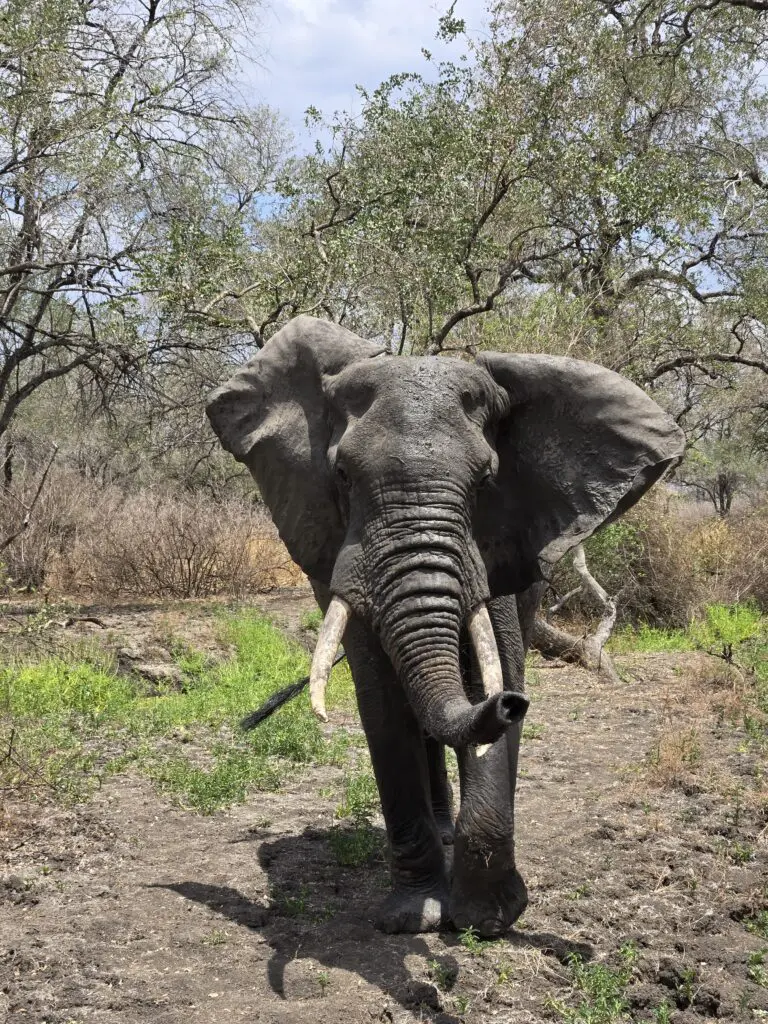
Big game hunting supplied one of those ends. European hunters sought to preserve animals and the opportunity to kill them, while African hunting was progressively curtailed. In 1922 the British named the reserve for Frederick Courteney Selous, a British explorer and hunter who had died fighting the Germans in 1917. In 1940, expansion of the reserve displaced Ngindo and Pogoro households, some of whom were then drawn into further resettlement under sleeping-sickness controls. The apparent emptiness of protected country had to be produced and maintained.
Cotton supplied another. In 1904, Texan specialists joined the German colonial cotton campaign, as German planners looked to the neo-slavery of sharecropping in the post-bellum American South for ways of organizing Black agricultural labor. During the wartime famine, a man-made disaster, German colonial officials sent hungry people to the cotton plantations, where grain could be had in exchange for work. Here the relationship between devastation and useful labor is almost unbearably plain. Removal made land and labor available for uses someone else could authorize.
Independence then brought a different claim on the river. Political freedom had to be made material, and electricity promised industry and the luxuries of modern life. The United States appeared again as a model, now for coordinated river development. In 1966, USAID took Tanzanian planners to Grand Coulee and the Tennessee Valley Authority, and Norwegian engineers later planned a dam at Stiegler’s Gorge. The Rufiji floods of 1968 supplied justification for compulsory ujamaa villagization. The national program, too, had views about where people should live.
I return in October 2025, on the day of the general election. Much of the former Selous is now Nyerere National Park, the founding president’s name placed over country once commemorating an imperial hunter.
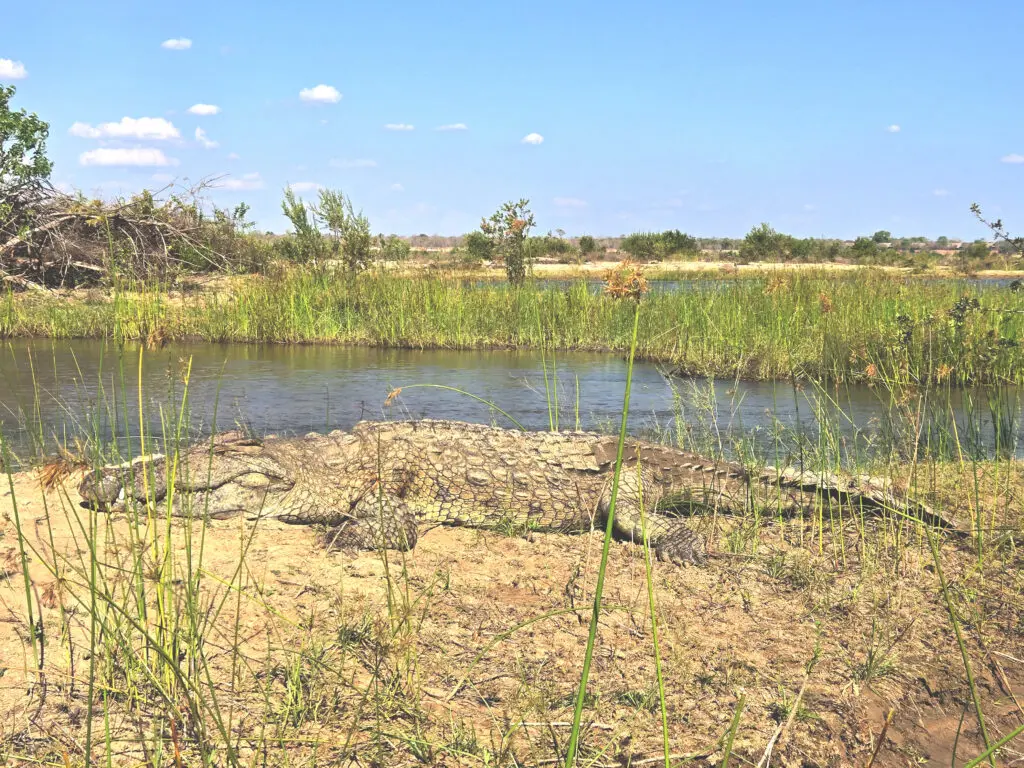
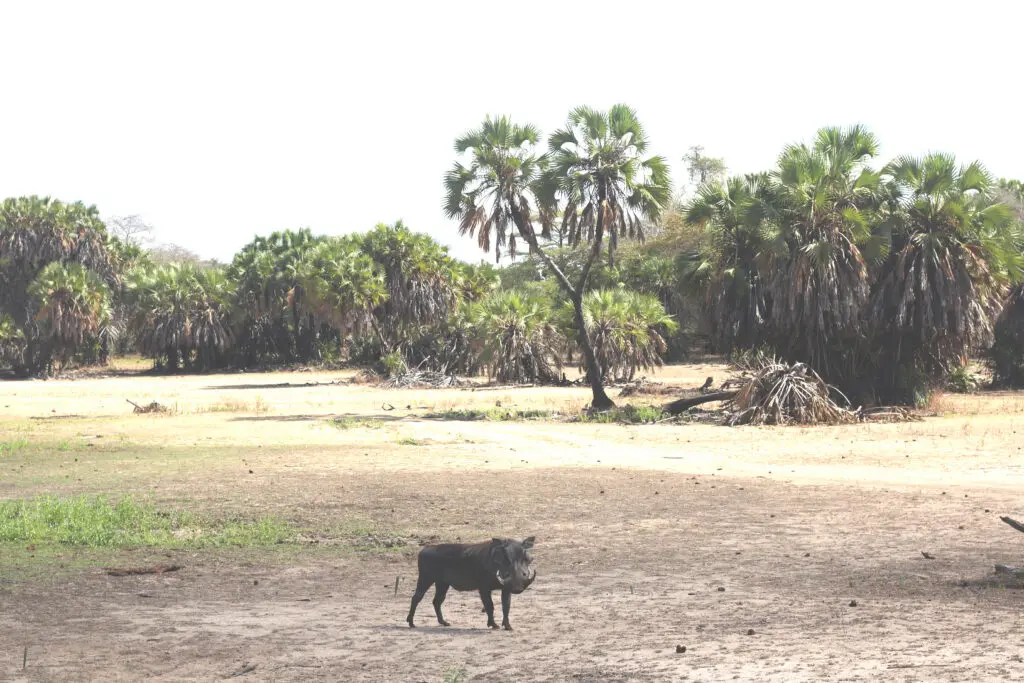
It is the end of the dry season, and Nyerere National Park seems unable to decide what it is. Stands of doum palms rise in clusters, their trunks forking and forking again, fan leaves rattling in a hot wind. Beyond them the acacias spread over grass burned the color of straw, and the ground between is cracked and pale with dust. Then, around a bend, water: a lagoon left behind by the river, still and brown and wide, hippos breathing at its surface, a crocodile lying on the bank as if it had been set down there. Dry and wet sit side by side and neither gives way to the other.
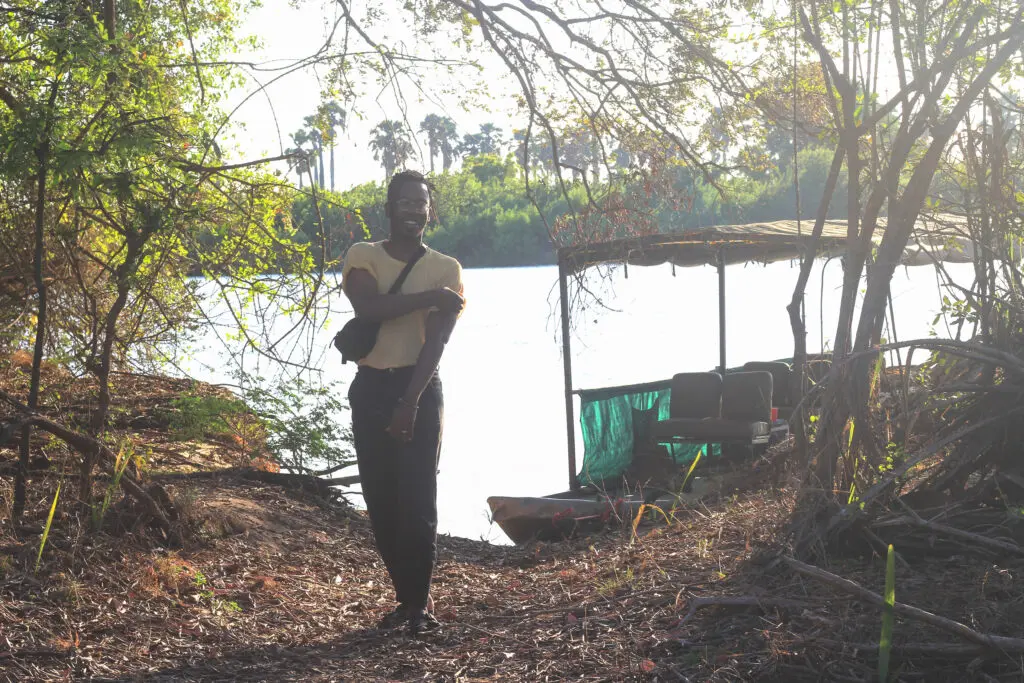
Leading opposition candidates had been excluded from the ballot. When young people protested, the state shut down the internet from 29 October to 3 November, imposed curfews, and met them with lethal force. An inquiry appointed by the government later acknowledged at least 518 deaths. The maji had promised protection from German bullets. The people in the streets were being fired on by the forces of their own state.
The Rufiji now passes through the Julius Nyerere Hydropower Project, built by Egyptian contractors for Tanzania’s electricity utility, with a generating capacity of 2,115 megawatts. In August 2026, President Samia Suluhu Hassan formally inaugurated the project and told the crowd that it belonged to Tanzanians.
For people downstream, the water was already doing work. Officials emphasize the damage floods can cause, but floodplain communities depend on regular inundation to sustain fertility and resources, and fear the absence of seasonal flooding more. A turbine makes one form of the river’s work count in megawatts. Other forms are counted in fertile fields and household subsistence. The nation includes the people downstream. Yet invoking the nation can make a particular group’s losses appear small beside a larger promise. In October 2025, it made the lives of citizens appear small beside the demands of order.
In 2015, I entered the springs and heard about water taken by people defending themselves against conquest. In 2025, I return to a river enlisted in another promise of collective life, under a state that invoked the nation while its forces killed its citizens. My own visits are among the uses the reserve permits. The woodland remains extraordinary. I am still trying to understand who gets to say what it is for.